
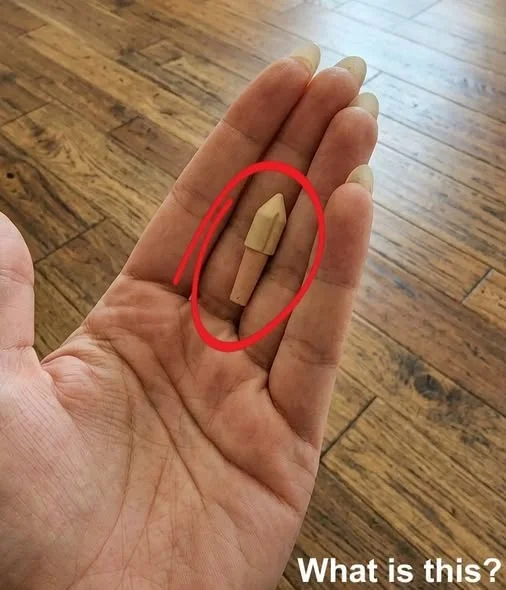
Why People Often Don’t Recognize It
One reason objects like this can be difficult to identify is that agarwood appears in many different forms.
It can be sold as chips of wood, small pieces, beads, incense, powder, oil, or specially prepared aromatic products.
Its appearance can therefore vary significantly.
A small dark piece may look like an ordinary piece of wood to someone unfamiliar with it.
Someone who recognizes the material, however, may immediately notice its characteristic appearance and aroma.
A Reminder That Ordinary Objects Can Have Extraordinary Histories
The mystery surrounding this small object is a good reminder that we often don’t know the history behind the things we encounter.
Something that looks insignificant may have centuries of cultural tradition behind it.
Agarwood is a perfect example.
It comes from trees, develops through a complex natural process, and has been valued for generations because of the fragrance produced by its resin.
What looks like a tiny piece of dark wood can therefore represent an entire world of history, craftsmanship, trade, and tradition.
The Next Time You Find Something Unusual…
Instead of immediately throwing it away, take a closer look.
Ask questions.
Sometimes an unfamiliar object can lead to a fascinating discovery.
And in this case, the simple question “Does anyone know what this is?” opened the door to the story of one of the world’s most intriguing aromatic materials.
Agarwood may not look particularly impressive at first glance.
But once you understand how it forms and why people have valued it for centuries, that little mysterious object suddenly becomes much more interesting.
Il resto è nella pagina successiva
